On July 22nd 1942, seventy-five women were called to the Ravensbrück Appellplatz. These women had just arrived from Lublin, all young and fit. The women were inspected by Ravenbrück doctors, Rolf Rosenthal, Gerhard Schiedlausky and Herta Oberheuser, along with Karl Gerbhardt (Himmler's top surgeon) and his assistant, Fritz Fischer. Ernst Grawitz, head of the German Red Cross and an SS physician was also present for parts of the experiments.
Four days later, the group of seventy-five Lublin women were called to the Revier. They were once again inspected by the same group of doctors, eventually selecting only ten for further inspection. From the group of ten, only six were selected for the first round of experiments.
About four days later, the six women who were selected were prepared for experimentation. They were bathed, shaven, given beds and put under anesthetic. In the following hours, the women woke up with hallucinations. Their legs were wrapped in plaster and labelled.
In the following days, the six women were locked into the Revier while their legs swelled and the plaster cut into the wound. Flies were swarming around the rotting flesh while the women drifted in and out of consciousness. Only three weeks later was the plaster and their bed sheets changed. At the same time, nine new Rabbits were selected and given surgery . By this point, the first round of experiments had proved inconclusive.
In the second round of experiments, it was believed that the tests turned up inconclusive because not enough was done to mimic a battle wound. Therefore, wooden splinters and glass were inserted into the Rabbit's wounds. Larger amounts of bacteria were also used so the infection could spread further. Each new wound was treated with a series of different drugs, sulphonamide drugs or nothing at all.
Although this round of tests proved to also be inconclusive, Ernst Grawitz thought that the injuries of the patients and the drugs used weren't enough. Grawitz was advocating for the next group of women to be shot in the leg.
On September 20th, several other Lublin women were called to the Revier. These women were not shot in the leg, however, they were injected with larger amounts of bacteria and more foreign objects (ex: glass, wood). After several days of leaving the current wounds rotting and undressed, the Rabbits were taken to the operating theater. Over the coarse of the following five days, each Rabbit was injected with several more rounds of various types of bacteria. By that point, the remaining Rabbits experienced excruciating pain in their legs and a terrible thirst.
After the final round of injections, the Ravenbrück Rabbits began to heal or die.
Alfreda Prus, a former student at the University of Zamość was given the label K1. Many suspected Alfreda had gangrene. For days she hiccuped and swore she was going to die. On her final day of life, a new incision was made in her leg. When she returned to her bed, she bled profusely. She was taken away on a stretcher, only to be heard screaming moments later.
Weronika Kraska was believed to be injected with tetanus. Complaining of a stiff neck, she was forced to drink water due to a locked jaw. While speaking of her two children, Weronika gave out a scream. As her condition worsened, Gerda Quernheim (a prisoner who worked alongside the camp doctors) injects her with a needle.
By the time the first four groups were healing from their wounds, another new group of women were called up to the Revier. On October 7th, 1942, the new group of Rabbits were bathed, inspected by a group of doctors and injected with various types of bacteria and foreign objects. The women awoke, several days later, with hallucinations, hiccups and stiff necks. A couple days after their injections, nine out of the original twelve were left.
Alfreda and Kazimiera Kurowska died from an extensive gangrene infection. The bacteria quantities were so large that their bodies couldn't put up a defense. Kazimiera's right leg was completely destroyed. Once the infection began to spread to the right side of her body, she was given a massive dose of morphine. Another Rabbit, Weronika Kraska was injected with tetanus, which killed her.
After the sulphonamide experiments, the surviving Rabbits were left to fend for themselves. The women were left in beds that were grey and sticky, while flies and maggots fed on the puss oozing from their wounds.
In the end, each round of the sulphonamide experiments proved to be inconclusive. Heinrich Himmler, by the end of October, had moved on to new interests.
Himmler believed that Karl Gerbhardt and Ludwig Stumpfegger (Adolf Hitler's future personal surgeon) should investigate the mending of broken bones. On November 2nd, a new group of Rabbits were called to the Revier. The incoming women were subjected to various types of operations: bone grafts, bone splinters, bone breaking and operations on muscles.
In the name of curiousity, dozens of Polish women and eventually women of various other nationalities were mutilated and abandoned. In 1946, four of the Ravensbrück Rabbits were able to give evidence at the Nuremburg Doctor's Trial.



About four days later, the six women who were selected were prepared for experimentation. They were bathed, shaven, given beds and put under anesthetic. In the following hours, the women woke up with hallucinations. Their legs were wrapped in plaster and labelled.
In the following days, the six women were locked into the Revier while their legs swelled and the plaster cut into the wound. Flies were swarming around the rotting flesh while the women drifted in and out of consciousness. Only three weeks later was the plaster and their bed sheets changed. At the same time, nine new Rabbits were selected and given surgery . By this point, the first round of experiments had proved inconclusive.
In the second round of experiments, it was believed that the tests turned up inconclusive because not enough was done to mimic a battle wound. Therefore, wooden splinters and glass were inserted into the Rabbit's wounds. Larger amounts of bacteria were also used so the infection could spread further. Each new wound was treated with a series of different drugs, sulphonamide drugs or nothing at all.
Although this round of tests proved to also be inconclusive, Ernst Grawitz thought that the injuries of the patients and the drugs used weren't enough. Grawitz was advocating for the next group of women to be shot in the leg.
On September 20th, several other Lublin women were called to the Revier. These women were not shot in the leg, however, they were injected with larger amounts of bacteria and more foreign objects (ex: glass, wood). After several days of leaving the current wounds rotting and undressed, the Rabbits were taken to the operating theater. Over the coarse of the following five days, each Rabbit was injected with several more rounds of various types of bacteria. By that point, the remaining Rabbits experienced excruciating pain in their legs and a terrible thirst.
After the final round of injections, the Ravenbrück Rabbits began to heal or die.
Alfreda Prus, a former student at the University of Zamość was given the label K1. Many suspected Alfreda had gangrene. For days she hiccuped and swore she was going to die. On her final day of life, a new incision was made in her leg. When she returned to her bed, she bled profusely. She was taken away on a stretcher, only to be heard screaming moments later.
Weronika Kraska was believed to be injected with tetanus. Complaining of a stiff neck, she was forced to drink water due to a locked jaw. While speaking of her two children, Weronika gave out a scream. As her condition worsened, Gerda Quernheim (a prisoner who worked alongside the camp doctors) injects her with a needle.
By the time the first four groups were healing from their wounds, another new group of women were called up to the Revier. On October 7th, 1942, the new group of Rabbits were bathed, inspected by a group of doctors and injected with various types of bacteria and foreign objects. The women awoke, several days later, with hallucinations, hiccups and stiff necks. A couple days after their injections, nine out of the original twelve were left.
Alfreda and Kazimiera Kurowska died from an extensive gangrene infection. The bacteria quantities were so large that their bodies couldn't put up a defense. Kazimiera's right leg was completely destroyed. Once the infection began to spread to the right side of her body, she was given a massive dose of morphine. Another Rabbit, Weronika Kraska was injected with tetanus, which killed her.
After the sulphonamide experiments, the surviving Rabbits were left to fend for themselves. The women were left in beds that were grey and sticky, while flies and maggots fed on the puss oozing from their wounds.
In the end, each round of the sulphonamide experiments proved to be inconclusive. Heinrich Himmler, by the end of October, had moved on to new interests.
Himmler believed that Karl Gerbhardt and Ludwig Stumpfegger (Adolf Hitler's future personal surgeon) should investigate the mending of broken bones. On November 2nd, a new group of Rabbits were called to the Revier. The incoming women were subjected to various types of operations: bone grafts, bone splinters, bone breaking and operations on muscles.
In the name of curiousity, dozens of Polish women and eventually women of various other nationalities were mutilated and abandoned. In 1946, four of the Ravensbrück Rabbits were able to give evidence at the Nuremburg Doctor's Trial.
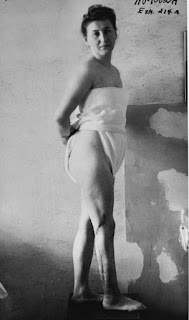
Maria Kusmierczuk showing her mutilated leg. On October 7th, 1942, Maria was infected with tetanus bacteria as a part of the Ravensbrück sulfanilamide experiments. Her wound did not heal, leaving the bone exposed and her unable to walk.
Bogumila Babinska survived two operations on the muscles of her thigh. The operations were performed in November and December of 1942. In 1943, another operation was performed on her shin bone. Bogumila was one of the Ravensbrück Rabbits to write secret messages in urine. She passed in 1980.
Barbara Pietrzyk survived bone operations on each leg at the age of 16. Unfortunately, Barbara passed in 1949 at the age of 21. A factor in the cause of her death being the operations she forcibly underwent at Ravensbrück.

Jadwiga Dzido.
Wladislava Karolewska
Links for further research:
1. Information about Maria Kusmierczuk:
2. Information pertaining to Bogumila Babinska:
3. Further information about Barbara Pietrzyk:
4. Further reading about Jadwiga Dzido:
5. More information about Wladislava Karolewska:


